Last Updated: Monday, July 27, 2026
Virtual Staging Vs Real Staging: Which Sells Better?
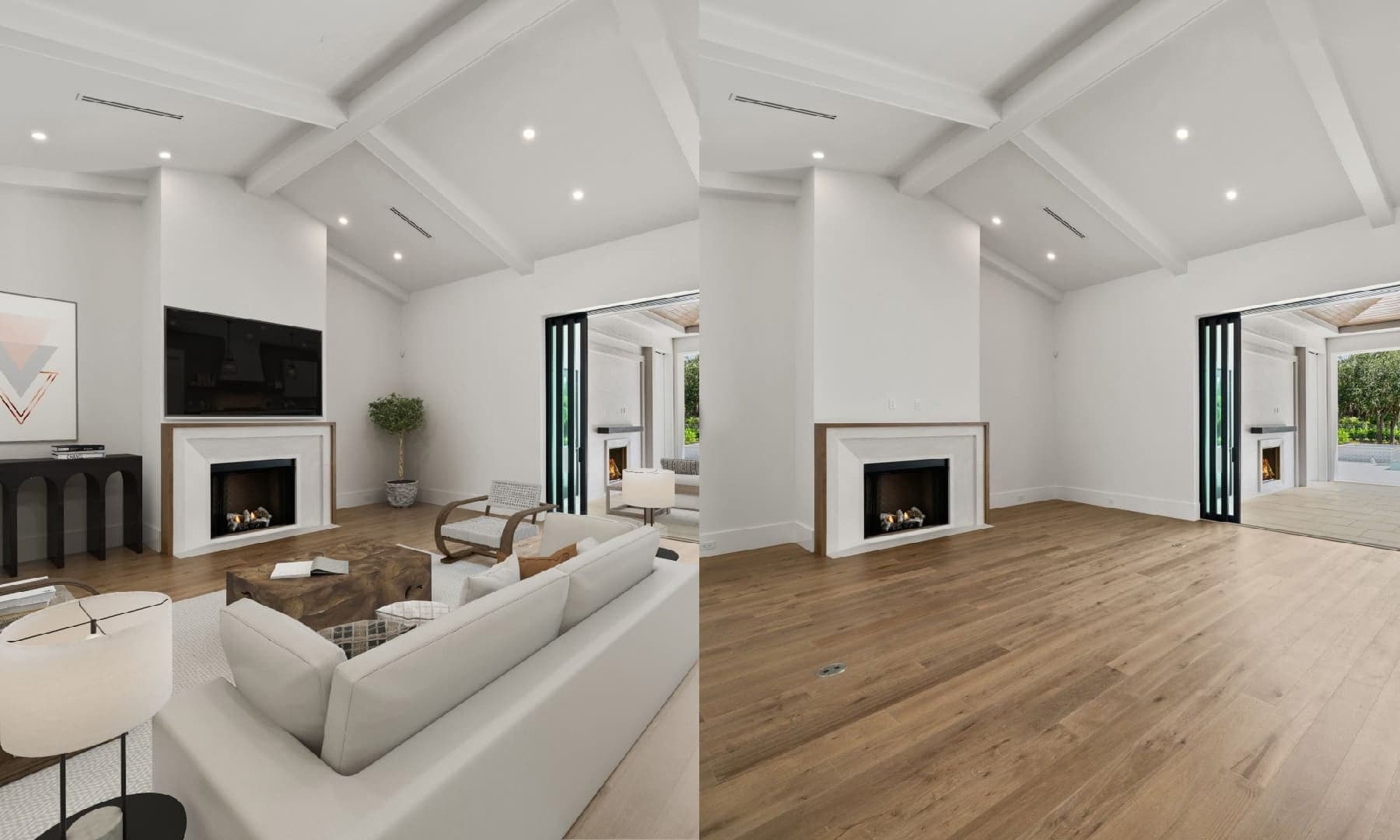
Table of Contents
Key Takeaways:
- Real (physical) staging typically sells homes better overall, especially for higher offers, because it creates a stronger emotional connection during in-person showings, while virtual staging mainly helps attract online interest.
- Staging in general works: staged homes sell faster and can increase offers by 1%-10%, but physical staging is often rated as more important by buyers and agents when it comes to closing the deal.
- Virtual staging is a cost-effective, fast solution that boosts listing photos and works best for vacant, entry-level, or budget-conscious listings where online appeal is critical.
- Real staging excels in competitive or higher-end markets by improving showings, helping buyers understand space, and increasing emotional engagement that leads to stronger offers.
- A hybrid approach (virtual staging for photos and light physical staging for showings) often delivers the best results by balancing cost, speed, and buyer experience.
In today’s competitive Tampa real estate market, first impressions matter more than ever. Buyers are scrolling through listings quickly, often making snap judgments based on photos alone. That’s why staging, whether virtual or physical, can play a critical role in how fast a home sells and at what price.
Virtual staging involves using technology to add design elements to a home for its online listing, while physical staging involves physically decorating a house. Both types of staging can work well to help a home sell. The question of which works better often comes down to your property, budget, timeline, and marketing strategy.
At Eaton Realty, we use both time-honored strategies and modern technology to help our clients sell their homes faster and for top dollar. We can help you decide if staging makes sense for your house, along with determining what kind of staging will work best for your needs. To learn more or to talk to a seasoned Tampa Realtor about buying or selling a home, contact us to talk to a member of our team.
What Is Virtual Staging?
Virtual staging uses digital technology to add furniture, décor, and design elements to photos of a vacant or sparsely furnished house. A designer edits listing images to make rooms appear fully furnished and styled without physically placing anything in the space.
While virtual staging can be a great, cost-effective alternative to physical staging, it is important to use it wisely. Buyers are increasingly wary of AI-enhanced or generated photos that may be misleading. For example, if you add a tree to an exterior photo or make the interior look nicer than it is in real life, prospective buyers may feel like it was a “bait-and-switch.”
For this reason, virtual staging should be used both judiciously and honestly. While it is fine to add some elements to help buyers envision what the house will look like, any virtual additions should not alter the character or condition of the home.
| Pros of Virtual Staging | Cons of Virtual Staging |
| Cost-effective | No in-person impact: Buyers touring the home won’t see the staged look |
| Quick turnaround | Potential disconnect: if not disclosed properly, buyers may feel misled |
| Flexible design styles | Limited emotional connection during showings |
| Ideal for vacant homes | Variable quality between providers |
Pros of Virtual Staging
Cost Effective
Virtual staging is typically far less expensive than traditional staging. While physically staging a home can run into the thousands of dollars, virtual staging may cost as little as a few hundred dollars, or even less, depending on the number of rooms and the provider. For sellers working with tighter budgets or investors managing multiple listings at once, those savings can add up significantly without sacrificing the visual appeal of the listing.
Quick Turnaround
In today's fast-moving real estate market, speed matters. Virtual staging images can be completed in a matter of minutes or days, allowing sellers to get their listings live quickly and start attracting buyers sooner. There's no need to wait on furniture deliveries or coordinate schedules with staging crews. You just submit your photos and receive polished, professionally designed images in return.
Flexible Design Styles
One of virtual staging's biggest advantages is the ability to tailor the look to different buyer demographics. Want to appeal to young professionals with a sleek, modern aesthetic? Or attract a family-oriented buyer with a warm, traditional feel? Virtual staging lets you swap styles easily, and in some cases, you can even create multiple versions of the same room to appeal to a broader audience.
Ideal For Vacant Homes
Empty rooms can feel cold, small, and hard to connect with, and buyers often struggle to imagine how they'd actually use the space. Virtual staging solves this by adding furniture, décor, and lighting to photos, helping buyers mentally move in before they ever set foot through the door. It transforms an echo-y, lifeless room into an inviting, functional living space.
Of course, virtual staging can also work for occupied homes. Some virtual staging providers can digitally work over photos of rooms that already contain furniture to declutter, refresh, or update the look without requiring the seller to move a single item. This makes virtual staging a viable option even for sellers who are still living in the property.
Cons of Virtual Staging
No In-Person Impact
Virtual staging only exists in the photos. Buyers touring the home in person will walk into the same empty or unfurnished rooms they would have seen without any staging at all. This gap between the listing photos and the actual showing experience can be jarring, and may make it harder for buyers to maintain the excitement they felt when browsing online.
Potential For Disconnect
If virtual staging isn't clearly disclosed, buyers who fall in love with a listing's photos may arrive at a showing feeling misled when the home looks nothing like what they expected. Transparency is key with virtual staging. Failing to disclose that images are virtually staged can damage trust and, in some markets, may raise legal or ethical concerns.
Limited Emotional Connection
Real estate purchases are deeply emotional decisions, and a big part of what drives buyers to make an offer is how a home feels when they're standing in it. Virtual staging can spark initial interest online, but it doesn't carry that emotional weight into the showing itself. Without physical furniture, soft lighting, and thoughtful décor present in the room, it can be difficult for buyers to form that gut-level connection that often seals the deal.
Variable Quality Between Providers
Not all virtual staging is created equal. Some providers use the same furniture sets and design layouts across every project, producing results that can look generic or out of place for your specific property. Low-quality virtual staging can actually hurt a listing by making it look artificial or unconvincing. Before hiring a virtual staging company, always ask to review examples of their previous work across different room types and design styles to ensure the quality meets your expectations.
What Is Real (Physical) Staging?
Real staging involves physically furnishing and decorating a home using rented furniture and accessories. Professional stagers design each room to highlight the home’s best features and create a welcoming atmosphere.
Physical staging can also be shown in listing photos so that people browsing online have a better idea of how the space can be used.
It's also worth understanding how staging differs from interior design. Interior design is a personalized process that creates spaces tailored to the tastes and lifestyle of a specific owner. Staging is something different. The goal isn't to reflect the seller's personality; it's to appeal to the widest possible pool of buyers and motivate them to offer the highest possible price. That strategic focus on buyer psychology is what sets professional staging apart from a seller simply tidying up or rearranging their own furniture.
| Pros of Real Staging | Cons of Real Staging |
| Stronger emotional appeal | Higher cost |
| Enhanced in-person showings | Longer setup time |
| Better spatial understanding | Ongoing costs |
| Limited Furniture Selection |
Pros of Real Staging
Stronger Emotional Appeal
When a home is professionally staged, buyers don't just see a house; they experience a lifestyle. Walking into a beautifully furnished, thoughtfully decorated space allows buyers to picture themselves living there in a way that photos alone simply can't replicate. That emotional resonance can be a powerful motivator, often making the difference between a buyer who's mildly interested and one who's ready to make an offer.
Enhanced In-Person Showings
First impressions are everything in real estate, and a well-staged home creates a lasting impression during tours. Every room tells a story, and that storytelling helps buyers feel at home before they've even put in an offer. Agents and sellers consistently report that staged homes generate more positive feedback and stronger engagement at showings.
Better Spatial Understanding
One of the most common challenges buyers face is understanding how a room will actually function once they're living in it. Real staging removes that guesswork by showing furniture placement in action. Buyers can see exactly how a sectional fits in the living room, whether there's room for a king bed in the master, or how a home office could be set up in a spare room, which gives them the confidence they need to move forward.
Cons of Real Staging
Higher Cost
Real staging comes at a price. Depending on the size of the home, the number of rooms staged, and the staging company you work with, costs can range from a few hundred dollars for a simple refresh to several thousand dollars for a full-home staging. For sellers already stretched thin by closing costs, repairs, and commissions, this added expense can feel significant, though many argue the return on investment makes it worthwhile.
Longer Setup Time
Unlike virtual staging, which can be turned around in days, real staging requires coordination. You'll need to schedule consultations, arrange furniture delivery, and work around the stager's availability, all of which takes time. If you're trying to list quickly or working within a tight timeline, the logistics of real staging can slow things down in ways that don't always align with the pace of the market.
Ongoing Expenses
Real staging isn't always a one-time cost. If your home sits on the market for more than a few weeks, you may be looking at monthly rental fees for the furniture and décor used in the staging. The longer the listing lingers, the more those fees accumulate, which can turn what seemed like a manageable upfront investment into a recurring expense that can eat into your proceeds over time.
Limited Furniture Selection
Unlike virtual staging, which gives designers access to virtually unlimited furniture styles and configurations, traditional stagers work from a finite physical inventory. This can mean design compromises, particularly in properties with unusual layouts or hard-to-access spaces. In some cases, logistical constraints (like narrow staircases or tight doorways) force stagers to choose pieces based on what can physically be moved into the home rather than what would best showcase the space.
Which Type of Staging Sells Better?
There is no one-size-fits-all approach to staging. The data makes a compelling case for staging in general. According to the Real Estate Staging Association, staged homes sell 73% faster and for more money than unstaged homes. Realtors report that staged homes see a1% to 10% increase in the dollar value offered. What the numbers don't settle, however, is which type of staging drives those results, and that's where your property's specific circumstances come into play.
A survey of buyers' agents found that 20% rated traditional physical staging as "much more important" to their clients than virtual staging, photos, videos, or virtual tours combined. Virtual staging received the lowest rating of all, with only 5% of agents calling it "much more important." This doesn't mean virtual staging isn't effective. It means that for buyers and agents who are heavily focused on the in-person experience, physical staging carries more weight.
Virtual staging performs best when:
- The home is vacant and needs visual appeal for online listings.
- You’re working with a tight budget.
- The property is priced competitively and likely to attract strong traffic.
- You need to get the listing live quickly.
Virtual staging is especially effective for condos, investment properties, and entry-level homes where buyers are already motivated and browsing heavily online. If you have already left your home, such as for a new job, then virtual staging can allow you to present your home well without investing in traditional staging.
Real staging performs best when:
- The home is in a higher price range.
- You want to create a luxury or lifestyle-driven presentation.
- The property has a unique layout that may benefit from helping buyers visualize how to use the space.
- You expect multiple in-person showings and open houses.
In Hillsborough County’s more competitive or upscale neighborhoods, real staging often leads to stronger offers. That is because it can enhance a buyer’s connection to the home and help show off certain features of the house to their best advantage. For example, if your house has a room without an obvious use, staging can help show prospective buyers the value of that space.
The Hybrid Approach: Best of Both Worlds
Many sellers are now using a hybrid strategy, combining virtual and real staging. For example, a buyer could:
- Use virtual staging for online listing photos
- Add light physical staging in key rooms only for showings
This approach balances cost and impact, ensuring your home looks great online while still delivering a positive in-person experience.
It is important to be transparent if you do decide to use virtual staging. Many multi-listing services (MLS) prohibit uploading virtually staged photos unless they comply with certain rules. This may include:
- The alterations are cosmetic only, with no structural changes
- The images are clearly labeled as virtually staged
- The original photos are either included or available to prospective buyers
Virtual staging, whether used alone or in combination with physical staging, can be a great tool. However, it shouldn’t ever be used to deceive buyers or in a way that may violate MLS rules.
Looking ahead, the line between virtual and physical staging is likely to blur further as technology evolves. Some platforms are already combining virtually staged listing photos with 360° virtual tours, allowing buyers to walk through a fully furnished version of a home from anywhere in the world.
Augmented reality tools are also emerging that let prospective buyers point their smartphones at an empty room during a showing and see virtual furniture overlaid in real time. For Tampa sellers, these tools aren't yet mainstream, but they represent the direction the industry is heading, and working with a real estate team that stays current on these innovations can give your listing a meaningful edge.
Key Factors That Influence Your Decision
When deciding between virtual and real staging, here are a few factors to consider:
- Your Budget: Virtual staging is significantly cheaper (up to 97% less expensive), making it ideal for sellers who are looking to maximize their return on investment (ROI).
- Your Timeline: If you need to list quickly, virtual staging offers a faster solution.
- Property Condition: Vacant or outdated homes benefit greatly from virtual or real staging to help buyers visualize potential.
- Target Buyer Demographic: Luxury buyers often expect a fully staged experience, while entry-level buyers may rely more on online visuals.
- Market Conditions: In a fast-moving seller’s market, virtual staging may be enough. In a slower or more competitive market, real staging may give you an edge.
Staging can positively impact your sale, whether you are using virtual or real staging.
- Virtual staging helps to generate more online interest and showings.
- Real staging often leads to stronger emotional engagement and higher offers.
Well-staged homes, especially physically staged ones, tend to sell faster and closer to (or above) asking price compared to unstaged properties. Virtual staging can be helpful, but sellers should be mindful of its limitations and the best way to use it honestly and effectively.
If you are unsure of whether staging is appropriate or what type of staging to use, our experienced Tampa realtors can help. We keep an eye on the market to know what works based on current conditions. Based on your budget, timeline, and other factors, we can help you make the best possible decision for your property.
What If You Didn’t Stage At All?
It's worth acknowledging that staging (both virtual and real) isn't always the right call. A vacant home that is clean, well-maintained, and freshly updated can sometimes present more authentically without staging at all. No staging may be appropriate when:
- The home is a fixer-upper in poor condition, where staging won't overcome the property's shortcomings.
- The vacant home is clean, freshly painted, and in good condition.
- Budget constraints make even virtual staging impractical.
With no staging, there's no risk of buyers arriving at a showing and feeling let down by a gap between the photos and reality, and you don’t have to make a significant investment in filling your home with furniture. That said, for most homes, some form of staging will generate more online interest, more showings, and stronger offers than leaving a space bare.
Ready to Maximize Your Home’s Value? Reach Out Today.
Choosing the right staging strategy can make a measurable difference in how quickly your home sells and its ultimate sale price. A knowledgeable Tampa real estate team can help you evaluate your options and recommend the best approach based on your specific property and market conditions. Our realtors can also ensure that your home is staged to show it off in its best light to help you get the best price and sell your house quickly.
Eaton Realty helps sellers create strategies to help their homes stand out from the crowd. We employ a variety of advanced marketing techniques to help our clients get results, including using both real and virtual staging when appropriate. If you’re planning to sell your West Central Florida home, we’re here to help. Fill out our online contact form or give us a call at 813-672-8022 to talk to a member of our team.
FAQs about Home Staging
Is Virtual Staging Enough to Sell a Home in Tampa?
In many cases, yes, particularly for mid-range or entry-level homes. However, pairing virtual staging with a clean, well-maintained property is essential for success during showings.
Do I Need to Disclose Virtual Staging in My Listing?
Yes. It is important to clearly disclose that images are virtually staged to avoid misleading buyers and maintain transparency.
How Much Does Real Staging Cost in Tampa?
The cost can vary depending on the size of the home and the scope of the staging. It typically costs anywhere from a few hundred dollars for consultations to several thousand dollars for full-service staging.
Can I Stage Only Certain Rooms?
Absolutely. Many sellers focus on key areas like the living room, kitchen, and primary bedroom to maximize impact while controlling costs. These rooms tend to have the biggest influence on buyers.
Resources:
- https://www.floridarealtors.org/news-media/news-articles/2025/05/3-things-know-about-virtual-staging
- https://washingtonian.com/2026/04/27/ai-staging-sell-home-real-estate-agents/
- https://www.floridarealtors.org/news-media/news-articles/2025/05/3-things-know-about-virtual-staging
- https://www.nar.realtor/sites/default/files/documents/2019-profile-of-home-staging-03-14-2019.pdf
- https://www.nar.realtor/newsroom/nar-report-reveals-home-staging-boosts-sale-prices-and-reduces-time-on-market
