Last Updated: Monday, July 27, 2026
Single-Family Vs. Multi-Family Homes: Which Is The Better Investment?
- Single-Family Homes vs. Multi-Family Homes
- Comparing Investment Potential
- Tenant Demand in Hillsborough County
- Return on Investment Considerations
- Who Should Invest in Single-Family Homes vs. Multi-Family Properties?
- Which Is the Better Investment?
- Scale Your Investment Portfolio In Hillsborough County With Eaton Realty
- Frequently Asked Questions about Investment Properties in the Tampa Area
- Resources:
Key Takeaways:
- Single-family homes tend to attract long-term occupants and may be easier for investors to manage.
- Multi-family properties can generate multiple income streams and may provide stronger cash flow potential.
- Financing, maintenance costs, vacancy risks, and appreciation potential differ between the two property types.
- The best investment depends on your financial goals, risk tolerance, management preferences, and investment timeline.
- In growing markets in the Tampa area, both single-family and multi-family properties can offer excellent investment opportunities when purchased strategically.
Real estate investment is one of the most popular ways to build long-term wealth. Whether you’re purchasing your first investment property or expanding your portfolio, one of the most important decisions that you’ll make is choosing between a single-family home and a multi-family property. Both options offer unique advantages and challenges, but which is right for you?
Some investors prefer the simplicity and broad market appeal of single-family homes, while others are drawn to the income-producing potential of duplexes, triplexes, and larger multi-family properties. If you’re considering buying an investment property in Hillsborough County, understanding how these property types compare can help you make a more informed decision. Our Tampa real estate agents can help you weigh the pros and cons and help you make a decision that is right for your investment needs.
At Eaton Realty, we pride ourselves on truly listening to our clients so that we can help them purchase a property that is right for them. Whether you are buying a property to live in or a rental property, we will help you explore your options based on your budget, wish list, and long-term goals. Reach out to talk to a West Central Florida Realtor about your property search.
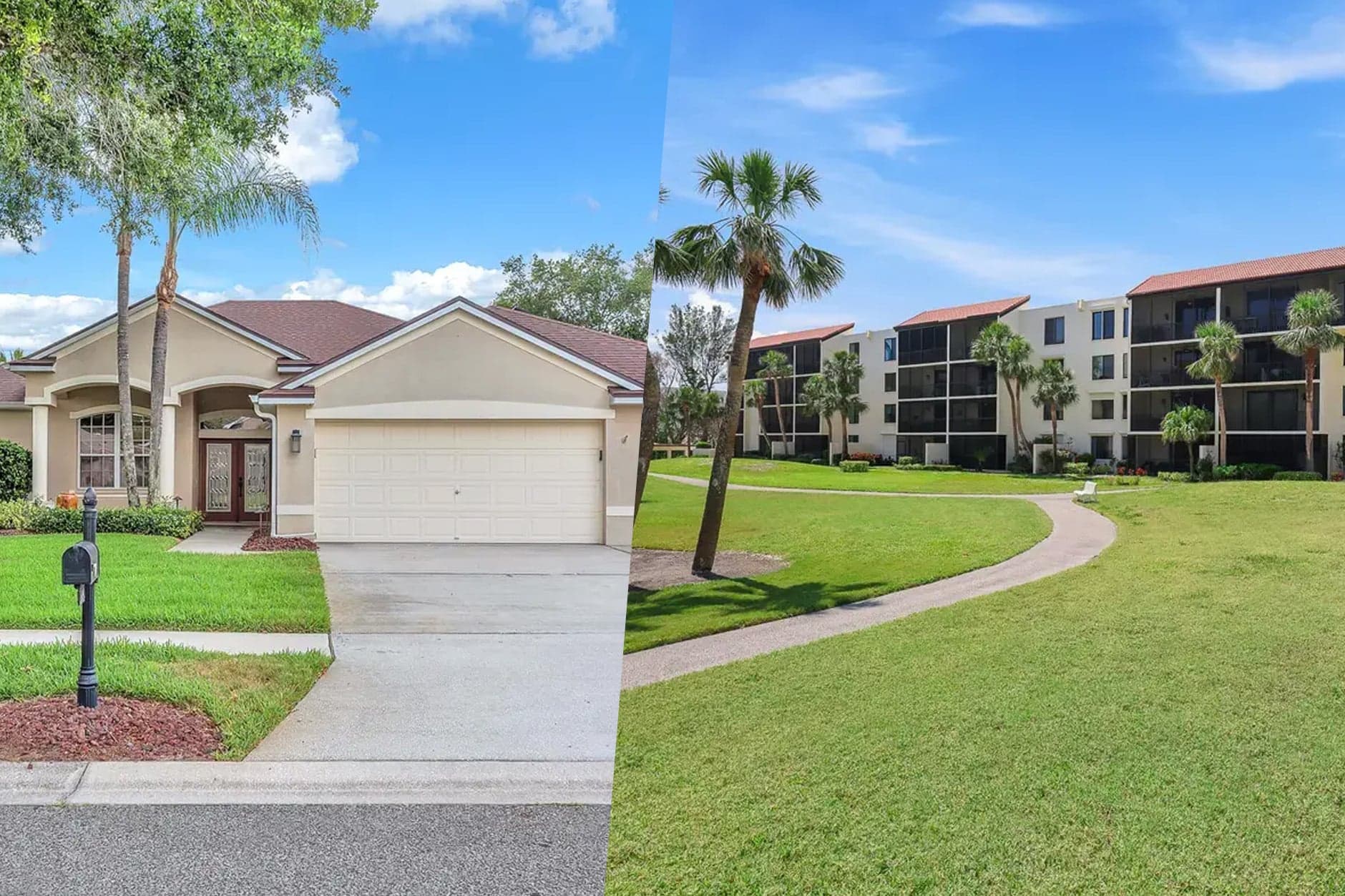
Single-Family Homes vs. Multi-Family Homes
A single-family home is a standalone residential property that is designed for one household. These homes typically sit on their own lot and do not share walls, entrances, or major living spaces with neighboring residences. Examples include traditional suburban homes, ranch-style houses, two-story detached homes, and new construction in planned communities. Single-family homes are often the most familiar type of residential real estate investment.
A multi-family property contains two or more separate residential units within a single building or on a single parcel. Examples include duplexes, triplexes, fourplexes, and apartment buildings. Each unit typically has its own kitchen, bathroom, and living areas, allowing multiple households to live independently within the same property. For investors, multi-family properties create the opportunity to collect rent from multiple tenants simultaneously.
Comparing Investment Potential
While both single-family and multi-family homes can generate returns, they do so in different ways. There are several key factors investors should consider.
Cash Flow Potential
Single-family homes generate income from one tenant or household. This can create stable rental income, especially in desirable neighborhoods where demand remains strong. However, there is only one source of rent. If the property becomes vacant, rental income drops to zero until a new tenant is secured.
Multi-family properties often provide stronger cash flow because multiple units produce rental income. For example, a duplex may generate rent from two households. If one tenant moves out, the other unit can continue generating income. This diversification can make cash flow more predictable and reduce the impact of vacancies.
At Eaton Realty, we often see first-time investors focus almost exclusively on monthly cash flow. While cash flow is important, we encourage clients to look at the entire investment picture. Some of the most successful investors we've worked with purchased single-family homes that generated only modest monthly cash flow initially but experienced substantial appreciation over time as Hillsborough County continued to grow.
We generally advise investors to ask themselves whether their primary goal is generating income today or building long-term wealth. The answer often helps determine whether a single-family or multi-family property is the better fit.
Winner: Multi-family properties. For investors focused primarily on monthly cash flow, multi-family properties often have the advantage.
Appreciation Potential
Historically, single-family homes have shown strong appreciation in many markets. Because owner-occupants make up a large percentage of buyers, demand often remains steady. Emotional buying decisions can also drive higher sale prices when inventory is limited.
Multi-family properties appreciate as well, but their value is often influenced by rental income and operating performance. Investors typically evaluate these properties based on financial metrics rather than emotional appeal.
One trend we've consistently observed throughout the Tampa Bay area is that highly desirable single-family homes often attract a much larger pool of future buyers than comparable multi-family properties. When it's time to sell, investors aren't just competing for other investors; they may also attract owner-occupants looking for a primary residence.
This broader buyer pool can create additional demand and help support long-term appreciation, particularly in established communities with strong schools, convenient commutes, and limited housing inventory.
Winner: Single-Family. In many residential markets, single-family homes experience much stronger appreciation over time, particularly in highly desirable communities.
Financing Considerations
Financing is often simpler for single-family homes. Lenders generally view them as lower-risk investments. Buyers may have access to conventional mortgages, FHA loans (for owner-occupied purchases), VA loans (for eligible buyers), and lower down payment options. This accessibility makes single-family homes attractive to newer investors.
For multi-family properties, financing requirements can be more complex. Lenders may require larger down payments, higher cash reserves, stronger income verification, and additional underwriting requirements. Larger multi-family properties may require commercial financing.
Winner: Single-family. For ease of financing, single-family homes typically come out ahead.
Vacancy Risk
With only one tenant in a single-family home, vacancies can significantly impact profitability. If a tenant leaves, the owner must cover all expenses until a replacement is found.
Multi-family properties spread vacancy risks across multiple units. Even if one unit is empty, the remaining units can continue generating income.
One mistake we occasionally see is investors assuming that a vacant single-family home will always be easier to re-rent than a multi-family unit. In reality, tenant demand varies significantly by neighborhood, school district, property condition, and price point. Single-family homes are often more attractive, but a multi-family unit often features lower monthly rent, which opens the door for a larger pool of potential tenants.
Before purchasing any investment property, we encourage buyers to analyze local rental demand rather than relying on broad assumptions about property type. A well-located single-family home may lease more quickly than a poorly located duplex, while the opposite can also be true.
Winner: Multi-family. Multiple income streams provide additional protection against vacancies.
Maintenance and Repairs
Single-family properties generally involve fewer maintenance responsibilities. There is only one roof, one HVAC system, and one household using the property. As a result, repairs are often easier to budget for and manage.
Multi-family properties typically require more ongoing maintenance. More tenants usually mean more repair requests, greater wear and tear, additional systems and equipment, and increased management responsibilities.
Winner: Single-family. Investors seeking a more hands-off experience often prefer single-family properties.
Property Management Requirements
With single-family homes, managing one tenant is generally simpler than managing several. Communication, rent collection, inspections, and maintenance coordination are less time-consuming with fewer people involved.
With multi-family homes, managing multiple tenants is more demanding. Owners may need to address tenant disputes, increased turnover, common area maintenance, and more frequent service requests. Professional property management may become necessary as the number of units increases.
Winner: Single-family. While every landlord can benefit from professional property management services, single-family rentals are often easier for self-managing investors (particularly for those who own just one property).
Tenant Demand in Hillsborough County
Tampa and nearby communities continue to attract families, professionals, and retirees seeking access to quality schools, outdoor recreation, and the booming Tampa employment market. Many remote workers, military members, and “snow birds” continue to flock to the region, driving demand for rental properties.
Single-family homes remain highly desirable among:
- Families with children
- Remote workers
- Long-term residents
- People relocating to the area who aren’t ready to buy yet
These tenants often stay longer and may treat the property as their own.
Multi-family housing appeals to:
- Young professionals
- Smaller households
- Renters seeking affordability
- Residents who prioritize location over square footage
Strong population growth throughout Hillsborough County continues to support demand across many different types of housing.
Based on our experience working with both landlords and tenants throughout Hillsborough County, rental demand is often driven by lifestyle factors as much as price. Families frequently prioritize school districts, fenced yards, and extra bedrooms, while young professionals may place a greater emphasis on commute times, walkability, and proximity to entertainment districts.
We encourage investors to think about the specific renter demographic they want to attract before purchasing a property. Understanding your likely tenant can help guide decisions about location, property type, and future improvements.
Return on Investment Considerations
When evaluating investment opportunities, it is important to look beyond purchase price alone. You should also consider:
- Rental income potential
- Property taxes
- Insurance costs
- Maintenance expenses
- Vacancy rates
- Appreciation projections
- Financing terms
A property with a lower purchase price is not necessarily the better investment if operating costs significantly reduce profitability. Likewise, a property with modest cash flow may still be an excellent long-term investment if appreciation potential is strong. A skilled Tampa real estate agent can help you evaluate the return on investment potential for the properties that you may be considering.
Who Should Invest in Single-Family Homes vs. Multi-Family Properties?
If you're purchasing your first investment property, we generally recommend focusing on a property that matches your comfort level as an owner rather than chasing the highest projected return on paper.
Many first-time investors are surprised by the realities of tenant communication, maintenance coordination, insurance requirements, and unexpected repairs. A simpler property that you feel confident managing may ultimately prove more successful than a larger investment that becomes overwhelming.
As investors gain experience, they often become more comfortable expanding into additional properties or different asset types.
Single-family homes may be ideal for investors who:
- Are purchasing their first rental property
- Want simpler property management
- Prefer lower maintenance demands
- Prioritize long-term appreciation
- Have limited experience as landlords
Many investors start with a single-family rental before expanding into larger investment properties.
Multi-family properties may be a better fit for investors who:
- Want a stronger cash flow potential
- Are comfortable managing multiple tenants
- Seek income diversification
- Plan to grow a rental portfolio
- Have experience with investment property management
- Want to maximize rental income on a single parcel
For investors focused on building recurring income streams, multi-family properties offer compelling opportunities.
Many successful real estate investors own both single-family and multi-family properties. A diversified portfolio can provide multiple income sources, reduced risk, and different appreciation opportunities. It also allows for greater flexibility during changing market conditions. Rather than viewing the decision as an either-or proposition, some investors choose to start with one property type and expand into the other over time.
Which Is the Better Investment?
The answer to this question largely depends on your goals. If your priority is simplicity, long-term appreciation, and easier management, a single-family home may be the better investment. If your focus is on maximizing cash flow, reducing vacancy risk, and building rental income, a multi-family property may provide greater opportunities.
Neither option is universally superior. The right investment is the one that aligns with your financial objectives, investment strategy, and comfort level as a property owner. In a growing market like Tampa, both single-family and multi-family properties can play an important role in building a successful real estate investment portfolio.
Interestingly, many of the most successful real estate investors we've worked with don't exclusively own single-family or multi-family properties. Instead, they gradually build a portfolio that includes both.
Single-family homes can provide strong appreciation potential and long-term tenant stability, while multi-family properties may help generate stronger cash flow and diversify income sources. Over time, a mix of property types can help investors balance growth, income, and risk.
Scale Your Investment Portfolio In Hillsborough County With Eaton Realty
Whether you’re searching for your first rental property, exploring multi-family investment opportunities, or evaluating the long-term potential of a single-family home, Eaton Realty can help you navigate the local market with confidence. Our team understands the unique characteristics of Tampa’s real estate market and can help you identify properties that align with your investment goals. From market analysis to property selection, we’re here to provide the guidance you need to make smart real estate decisions.
Whether you’re looking for a house to buy for yourself or an investment property, Eaton Realty has the skill and experience to help you make the best possible decision. We can help you weigh the pros and cons of each type of investment property based on your circumstances. To learn more, give us a call at 813-672-8022 or fill out our online contact form to talk to a seasoned Tampa Realtor.
Frequently Asked Questions about Investment Properties in the Tampa Area
Can I Live in One Unit of a Multi-Family Property?
Yes. Many investors choose this strategy, which is often referred to as “house hacking.” It can be a way to offset housing expenses while building equity and gaining experience as a landlord.
Can Zoning and Other Restrictions Affect Future Rental Use of a Property?
Yes. Local zoning regulations, homeowners association (HOA) rules, and municipal ordinances may impact how a property can be used. Investors should always review applicable regulations before purchasing and may want to consult with an attorney.
Should I Prioritize Newer Construction or Older Properties for Investment?
Both can be viable investments. Newer properties may require fewer immediate repairs, while older properties sometimes offer opportunities for value-add improvements and increased equity. The price of the property and your tolerance for performing renovations and repairs will play a big role in your ultimate decision.
How Often Should I Reevaluate the Performance of an Investment Property?
Most investors benefit from reviewing rental income, expenses, market conditions, and return on investment at least annually to ensure that the property continues to meet their financial goals. At Eaton Realty, our property management services include annual reports so that it is easy to track and analyze investment property performance.
